Dual-use has traditionally been associated with physical products: equipment and materials that can be utilised for both civilian and military purposes. The definition is too narrow. As society’s critical functions increasingly rely on digital solutions, significant potential remains untapped.
In Finland, data is continuously being generated that could support national defense in exceptional circumstances. Even citizens’ own digital devices and activity in digital environments should be considered part of the bigger picture of our future national security.
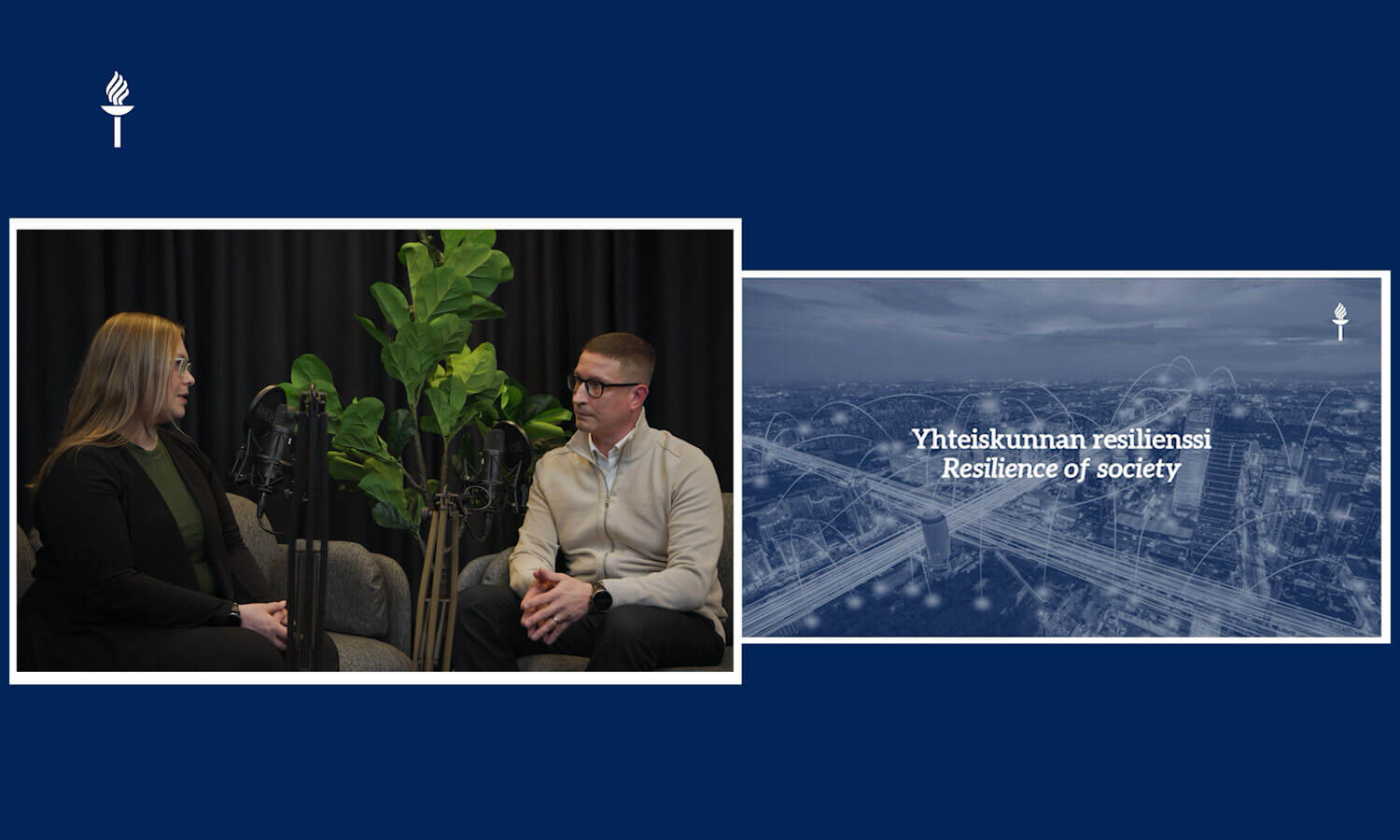
“Digital dual-use means that digital services used in civilian markets or by public authorities can, when needed, also be leveraged to support national defense. The key question is how we could utilise services originally designed for civilian use in exceptional circumstances,” says Gofore’s Director for the Defense and Security sector, Markus Asikainen.
Finland has a vast amount of critical infrastructure, from energy production to industry and transport, all generating sensor data. Today, even an ordinary passenger car is essentially a computer on wheels.
“In a real-life crisis situation, any data that supports Defence Forces logistics or relates to people’s movement, well-being or skills becomes relevant. These are exactly the kinds of data many companies already collect as part of their normal business operations,” Asikainen explains.
The current situation: no one is leading the development of dual-use
According to Asikainen, dual-use still too often depends on fortunate coincidences where an authority and a company happen to meet under the right circumstances and recognize a shared path for development. The current situation stems from the fact that no single party coordinates the development of dual-use; instead, progress depends on cooperation between multiple actors such as the Ministry for Foreign Affairs, the Ministry of Defence and Customs.
Although academia and various networks play a key role in dual-use innovation and development, companies are still the main engine of progress. At the same time, there is no national strategy for dual-use. Perhaps there should be.
“Digital dual-use has no clear owner. Responsibility has effectively been left to companies, which are expected to develop and finance products or services for dual-use without clear guidance. This is not sustainable, and it means good innovations may never be put to use.”
Another challenge is export restrictions related to dual-use. As a result, export companies may even fear that their product will be classified as a dual-use product.
“Companies should be encouraged to innovate, but at the same time there is a risk that business may be jeopardised if they are seen as manufacturers of dual-use products. This is a question of values and priorities that deserves broader discussion.”
A data model lies at the heart of digital dual-use
According to Asikainen, digital dual-use should be built into systems already in peacetime as part of their core architecture, rather than being added afterwards as a separate feature. This requires the development of data models and preparedness architecture before any exceptional or crisis situation arises.
“In an ideal scenario, companies would be told what the national data model looks like: if you build these kinds of interfaces into your system, you are compatible and can become part of the ecosystem,” Asikainen says.
A good example of a national data model in practice is Suomi.fi, which connects information systems across public authorities. Its technical platform, X-Road, enables secure data exchange between authorities’ systems.
“Digital dual-use would extend a similar model to also cover private sector solutions. Once a national data model is defined, companies can develop their systems so that the data they generate can be utilised by the Finnish Defence Forces in exceptional circumstances.”
Once a national data model is defined, companies can develop their systems so that the data they generate can be utilised by the Finnish Defence Forces in exceptional circumstances.
Asikainen also emphasizes the need for parallel systems. The Defence Forces cannot rely on critical ERP systems functioning from just one protected location.
“Critical systems must have backup operating environments to which functions can be transferred when necessary. The same applies to digital dual-use solutions. They too must function in all circumstances.”
Developing digital dual-use is a strategic choice
According to Asikainen, it is clear where change should begin: at the center are the choices around objectives and a shared understanding of the direction in which development should move.
“In the current geopolitical situation, the Defence Forces now have an excellent opportunity to define the target state, because there is sensitivity to the need for development. This allows companies to direct their development work to the right areas instead of trying to guess what might be useful. In other words, we should move from a world of fortunate coincidences to one of systematic dialogue and better identification of capabilities and needs,” Asikainen explains.
The topic deserves much broader discussion than it currently receives.
“It would be valuable for this discussion to take place within the Defence Forces across branches and capability owners. That would help create a better understanding of what digital dual-use means in the current operating environment, and what it means for both branch-specific and shared capabilities.”
Now is the time to act
Smart digital solutions strengthen society’s security, stability and resilience. Gofore wants to play a role in building the solution and act as a connector between different actors.
Asikainen sums it up:
“Now is the time to start the discussion on the digital dimensions of dual-use. Let us define together what kind of data is needed, where it resides and how it can be securely utilised. Ultimately, this is in the long-term interest of Finnish society as a whole.”
Digital dual-use does not happen by chance. It must be designed wisely in advance.
“We have experience of both private sector systems and the requirements and solutions of the defense and security sector. We can act as a bridge between these two worlds and help identify which companies and solutions can best serve national security,” Asikainen says.
Gofore provides customers in the security, defense and space sectors with modern implementations and services that meet high security requirements. Space-based capabilities and satellite-based situational awareness support defense and security solutions.