23.11.2026 08:00:00 EET
Gofore’s expertise supports research into Mercury and solar radiation as part of the BepiColombo space mission. The control software for a scientific instrument aboard ESA’s spacecraft, which is arriving in orbit around Mercury in November, was developed by Huld, now part of Gofore. This pioneering research may also help us understand space weather affecting Earth.
The two spacecraft of BepiColombo, a joint mission by the European Space Agency (ESA) and the Japan Aerospace Exploration Agency (JAXA), have travelled for eight years and nearly ten billion kilometres to reach Mercury. The spacecraft entered orbit around the planet on 21 November 2026. The mission aims to provide a more comprehensive picture of the least studied rocky planet in our solar system and improve our understanding of space weather that also affects Earth.
Huld developed the autonomy functionality of the main computer aboard ESA’s Mercury Planetary Orbiter, as well as the software running in the shared data processing unit of the SIXS and MIXS scientific instruments.
“You could say that Gofore is responsible for technology worth over a billion euros – namely, the spacecraft’s autonomy when it has no contact with Earth. We are also looking forward to seeing what the scientific instruments will achieve,” says Matti Anttila, Director of Business Development for Gofore’s Defence & Space business, who has been involved in the mission for many years.
“It is truly rewarding to see a project that began back in 2006 reach its most important phase and to be part of it. At the time, BepiColombo represented Finland’s largest contribution to space missions and gave us valuable experience in areas such as building consortia,” Anttila continues.
The software for the SIXS and MIXS scientific instruments monitors their operation and processes control commands and telemetry data. It also compiles large volumes of measurement data into manageable formats, such as statistical summaries. In addition, Huld’s independent software verification and validation has helped ensure the success of the mission. During the eight years before launch, Huld’s work covered systems engineering, software development and maintenance. Huld has also contributed to the mission through independent software verification and validation.
The SIXS and MIXS scientific instruments provide complementary observations. SIXS measures X-rays from the Sun, as well as high-energy protons and electrons, and plays a key role in studying solar activity and, consequently, space weather affecting Earth. Alongside it, MIXS studies X-rays emitted from Mercury’s surface, which may also help improve our understanding of intense space weather phenomena. Together, the instruments’ observations also help determine the elemental composition of Mercury’s surface and shed light on its formation and evolution.
The two BepiColombo spacecraft, ESA’s Mercury Planetary Orbiter and JAXA’s Mio, are scheduled to separate from each other in December 2026. The main science phase is planned to begin in April 2027 and last for at least one year. The scientific instruments will begin their work once the spacecraft has entered orbit around Mercury. Gofore’s work on the instruments will continue through any fine-tuning or updates that may be needed.
The views expressed in this release do not officially represent ESA or JAXA.
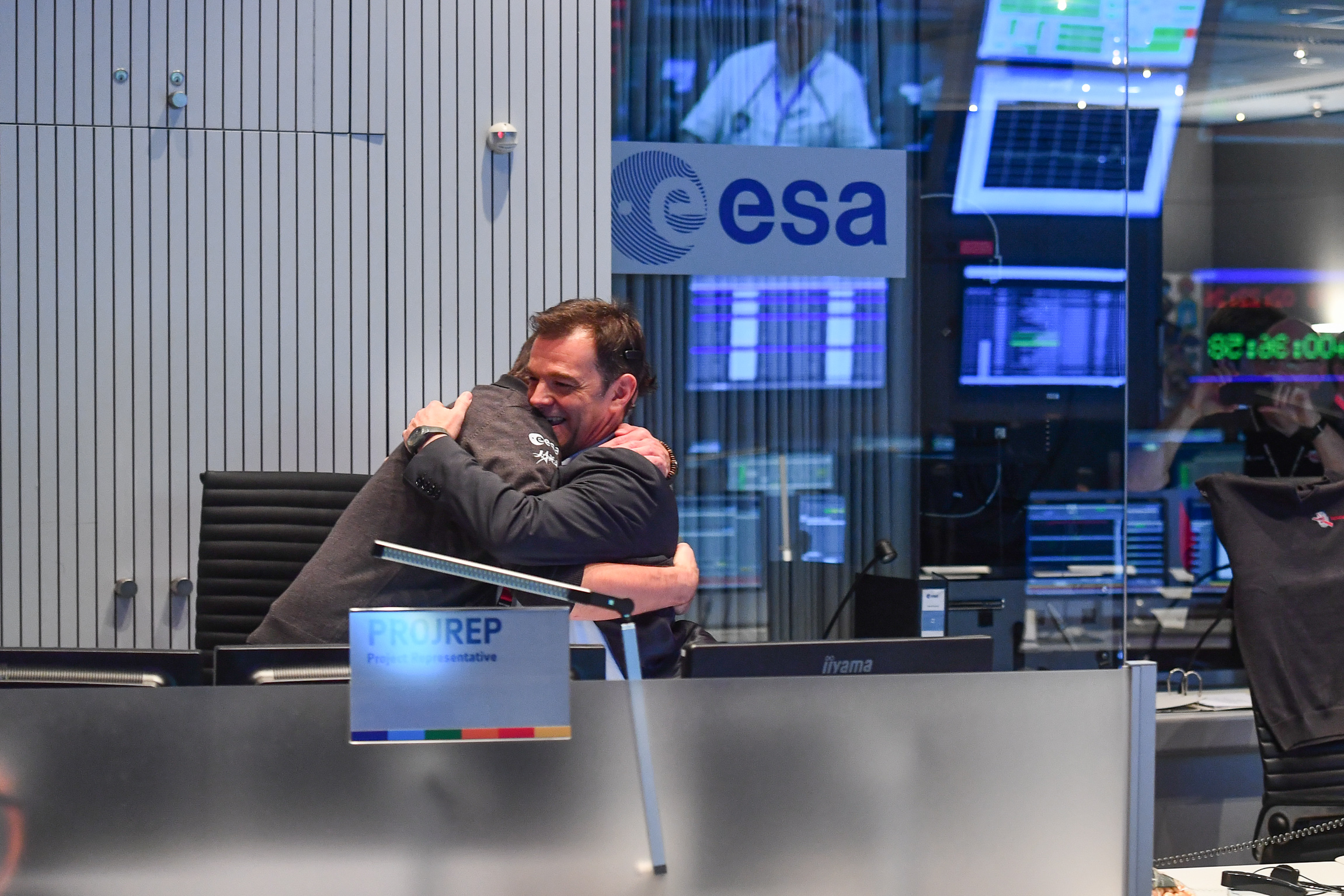
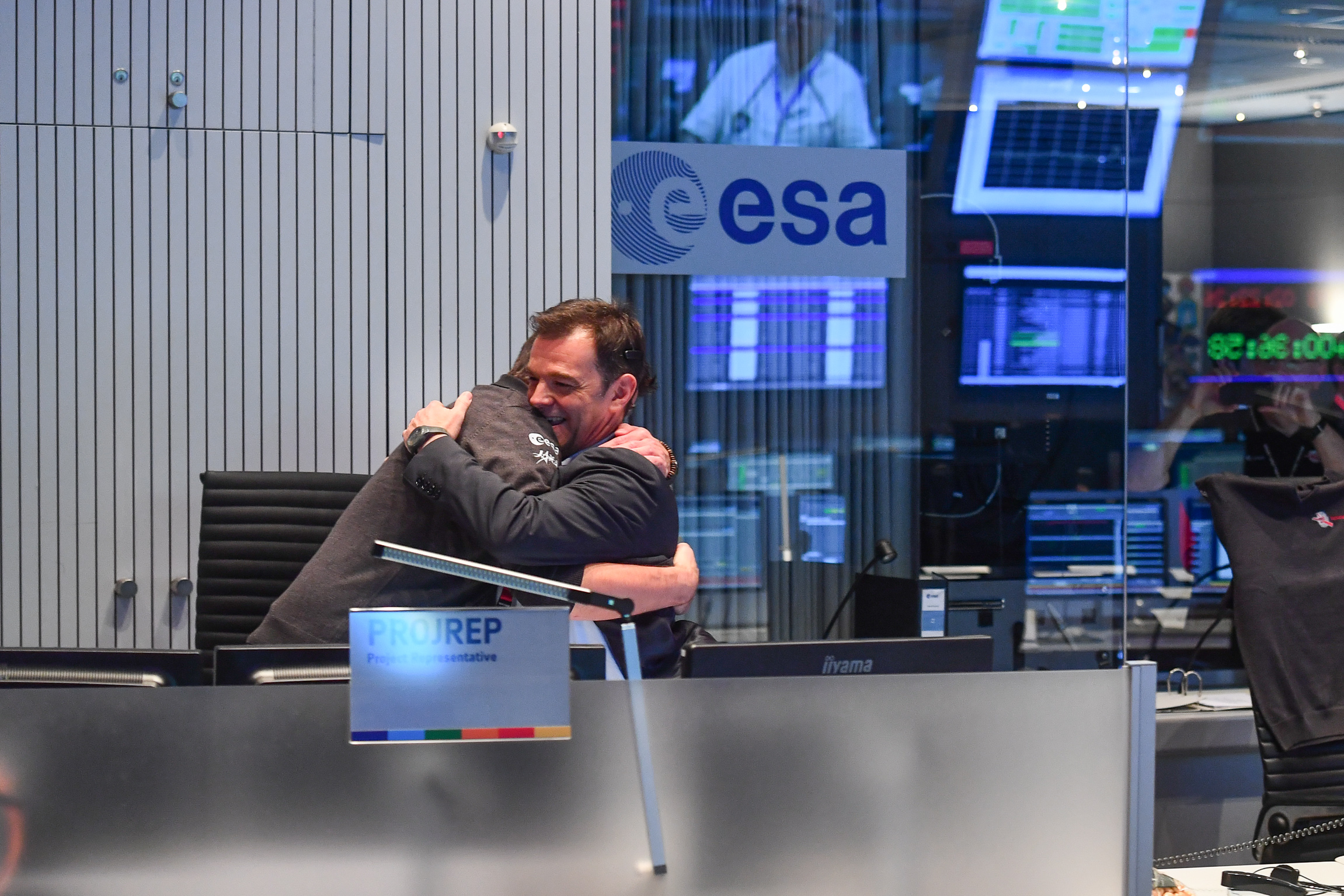
Image © ESA
Further information:
Matti Anttila
Director, Business Development, Defence & Space
Gofore Plc
Media enquiries for Mr Anttila:
Emmi Berlin
IR & PR Lead, Gofore
emmi.berlin@gofore.com
Tel. +358 400 903260