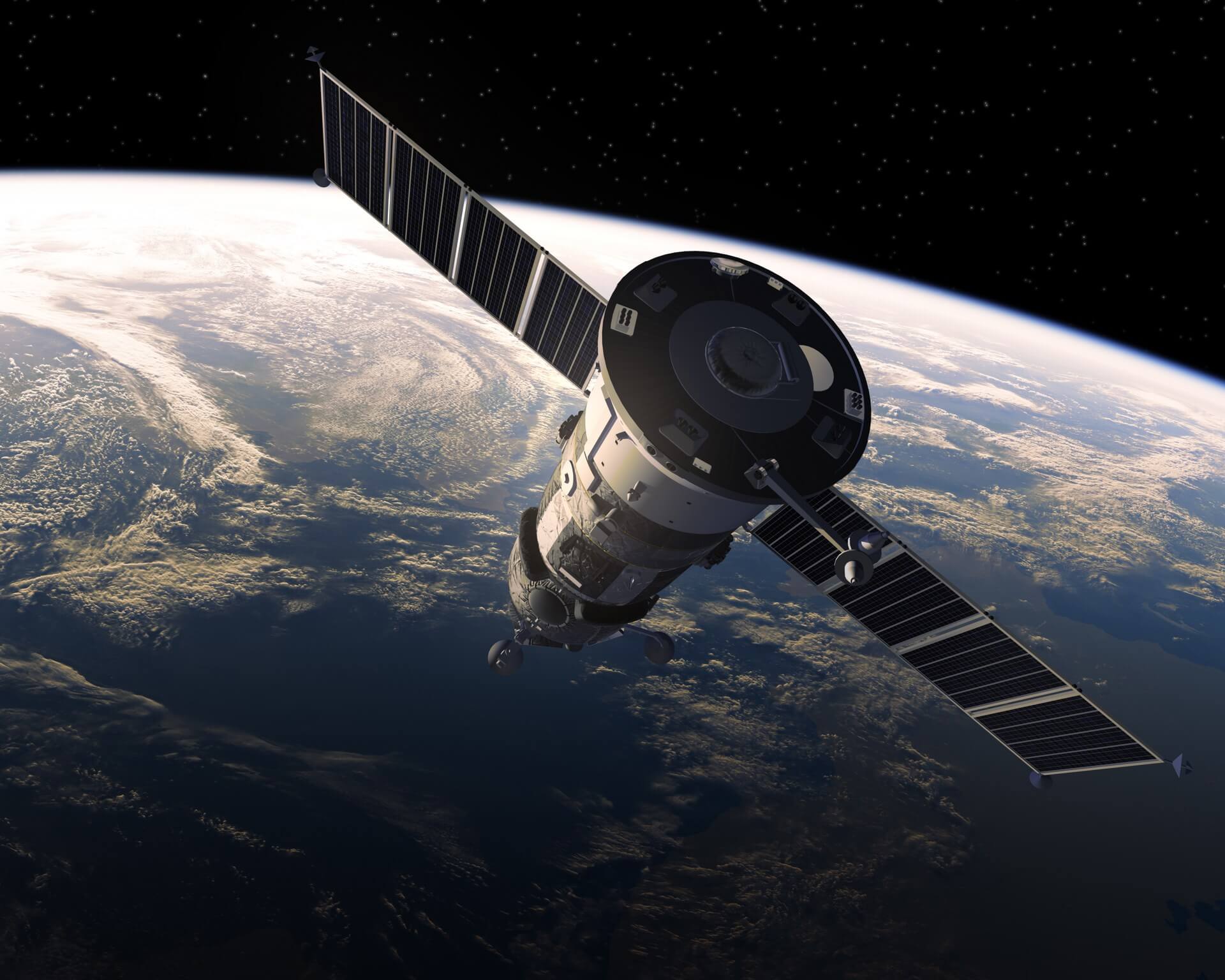
Reliable weather forecasts and climate research rely on continuous, high‑quality observations of the Earth’s atmosphere. The MetOp Second Generation (MetOp‑SG) mission has now reached a key milestone, bringing Europe closer to producing this data consistently and at scale.
With one of its core instruments, radio occultation sounder, validated for operational use, the mission strengthens the foundation for understanding climate change, predicting extreme weather, and supporting better decisions in society.
Gofore has been responsible for developing the radio occultation and instrument control functionalities, ensuring that critical atmospheric data can be captured and used reliably.
Turning GNSS signals into atmospheric insight
The radio occultation instrument observes the Earth’s atmosphere using signals transmitted by GNSS satellites such as Galileo, GPS, and BeiDou. As the signals travel through the atmosphere, they carry information about temperature, pressure, humidity, and ionospheric conditions.
Gofore has developed the radio occultation functionality together with the instrument control system, which manages how the instrument operates, receives commands, and reports its status. These functions ensure that measurements are captured consistently and that the instrument can be monitored and controlled throughout the mission.
“Radio occultation has long been used to study planetary atmospheres. Applied to Earth, it provides accurate, globally comparable data that is essential for both forecasting and climate research”, explains Project Manager Tatjana Petkovic.
In addition to the flight‑side software, Gofore has built a ground processor prototype that verifies how the instrument data is processed and used on Earth. The prototype has been used to test the performance of both the instrument and its algorithms during ground testing and in‑orbit validation.
Long‑term impact for a more resilient society
As the instrument transitions into routine operations, the focus shifts to stable performance and long-term monitoring.
“These systems are designed to last, and reliability over time is just as important as technical performance at launch”, Petkovic notes.
Beyond the technical achievement, MetOp‑SG plays a broader role in strengthening Europe’s capabilities in Earth observation.
“Ultimately, data from missions like this contributes to safer communities and a more resilient, sustainable future”, Petkovic says.
“What I’m most proud of is the dedication and collaboration that went into this work over many years. Delivering something like this requires persistence, trust and deep expertise, and it’s rewarding to see that effort turning into tangible results”, she adds.
Learn more how Gofore supports space missions with safety‑critical software