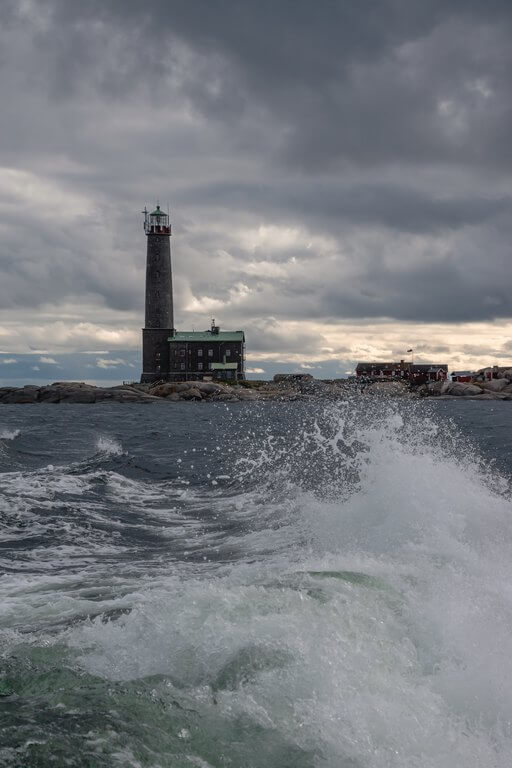
Our operating environment – and the very concept of security – is still changing rapidly. The transformation is both technological and geopolitical. Societies are investing more in comprehensive security than they have for decades. But where does that leave companies to? Could the changing security landscape also spur innovation, strengthen competitiveness, and create new solutions for businesses?
On World Standards Day, 14 October, I was invited to join an SFS Finland panel to discuss how security can serve as a competitive advantage and an enabler of growth.
The next phase in Finland’s security development is not about preparing for singled out or one-time threats. It is above all safeguarding society’s ability to function in an environment where physical, digital, information and economic security are increasingly intertwined.
This article summarises four opportunities how the security environment can help businesses grow.
The next phase of comprehensive security development is to safeguard societies’ ability to function in environments where physical, digital, information and economic security are increasingly intertwined.
Opportunity 1: From reactive measures to continuous preparedness and self-protection
There is a growing number of companies that operate some way in the defence and security sector. Upon entering the market, they are likely to face new kinds of risks, including becoming deliberate targets including e.g., hybrid interference, increasingly complex and aggressive cyberattacks, as well as other forms of sabotage.
Clearly, public authorities cannot protect every organisation in every situation. Businesses must therefore invest more in self-protection. In addition to physical and digital safeguards, this requires management to maintain strong situational awareness and the entire organisation to have a pre-planned, practised ability to recover and continue operating under exceptional circumstances.
But where should businesses begin the aforementioned self-protection?
Awareness is often the fastest and most cost-effective layer of defence. Organisations must identify their own vulnerabilities. When management understands the threat landscape and the organisation rehearses its response to disruption, the business is immediately better protected against interference and sabotage. Developing effective self-protection capabilities first—and then helping others do the same—could also create new export opportunities.
Organisations need to identify their vulnerabilities: When management understands the threat landscape and the organisation rehearses its response to disruption, an organisation is immediately better protected.
Opportunity 2: In the modern age to be efficient, is to be resilient
Our understanding of resilience needs updating. Resilience is not merely the ability to withstand adversity or recover afterwards. Above all, it is the ability to rebound and continue operating as normally as possible, both during and after a disruption.
This requires alternative operating models, tested backup systems and rehearsed transitions from one solution to another. Critical operations must not depend on a single system, supplier or key individual.
An organisation that can continue operating despite uncertainty, disruption or even sabotage can also continue serving its customers, honouring its commitments and protecting its market position. This is particularly important in industrial production and logistics chains. In an interconnected world, the absence of even one component, spare part or raw material can trigger further disruption across extensive networks and over long periods. Ultimately, resilience in the digital age is a modelled and repeatable capability.
In an interconnected world, the absence of even one component, spare part or raw material can trigger further disruption across extensive networks and over long periods. Ultimately, in the digital age, resilience is more and more a modelled and repeatable capability.
Opportunity 3: New needs for a stronger leadership in comprehensive digital security
The era of hybrid threats is changing the principles of comprehensive security. In the future, comprehensive security must be led more decisively from a digital perspective, with solutions designed proactively to meet the demands of the AI era.
Finland has considerable expertise in technology, telecommunications and cyber security. However, organisational and administrative silos hinder its effective use. In some situations, critical information cannot be shared securely enough between stakeholders. This is an underlying dilemma that must be addressed more decisively and well before it is actually ever needed.
The priority is to ensure that our digitally enabled society remains operational under all circumstances. Western societies therefore need stronger leadership in high security, preparedness and continuity—leadership that responds to modern threats and brings together public authorities, businesses and critical infrastructure operators into a secure entity.
The priority is to ensure that digitally enabled societies remain operational under all circumstances. A new level of digital preparedness responding to modern threats and bringing together public authorities, businesses and critical infrastructure operators.
There are good news, too. Many of the necessary technical capabilities already exist.
The key is to determine what structures, solutions, data flows and leadership is needed for better comprehensive digital security in the future.
The next step requires a shared target state, clear ownership and the ability to integrate existing solutions into a digital backbone for comprehensive security. This expertise is relevant across Europe, where awareness for this is only beginning to emerge.
Comprehensive security has real leverage in becoming a growth engine for business and new dual-use
In the long term, crises have leverage to set positive change in motion by accelerating innovation cycles and lowering barriers. It can therefore be argued that the changing security environment may create new business opportunities.
The time for bold modelling and innovation in dual-use solutions is now—especially for industrial and technology companies who should seize this opportunity decisively.
The most resilient organisation of the future are defined by their ability in continuing to operate, adapt rapidly, and build trust even as the world around them changes fast.
For businesses, security is becoming more than risk management. It is a promise to customers: a promise of operational capability, reliability and continuity. Standards—and their adoption, compliance and continuous development—are central to this. They create predictability, trust and much-needed control in an otherwise volatile world.
Dive deeper: Satellite data in creating situational awareness
Space has fundamentally transformed situational awareness in defence.
The data produced by satellites makes the operating environment more transparent than ever, but it also creates a new challenge: how can the right observations be identified from vast volumes of data quickly enough to support decision-making?