When a product is created digitally first, enriched through use, and data from the field is translated into decisions for the next product iteration, organisations gain a competitive edge and accelerate time-to-market. Even if a company is well advanced in its product digitalisation journey, certain factors may still prevent it from becoming a market leader.
A digital lifecycle approach enables industrial companies to deliver significant added value to their customers while strengthening competitiveness. When things are done right from the very beginning, R&D and the following phases of the lifecycle can achieve up to 90% savings in time and cost.
An organisation may be far along in digitalising the product lifecycle, yet still leave substantial value unrealised. Typical signs include:
1. Development is siloed
R&D optimises product development, production optimises efficiency, service and maintenance optimise usage, IT focuses on systems, and safety and regulatory aspects are added on top – but no one is optimising or leading the product as a whole.
2. Work is driven by projects, not products
Although the talk is all about products, work is still organised around projects. Instead of lifecycle thinking, short-term sprints are optimised.
3. Learning is slow and does not accumulate
Data from the field does not systematically inform product development decisions. Instead, it remains in reports, separate systems, and within individual teams and functions. Data exists, but it is not connected to decision-making.
4. Complexity takes over
The number of configurations increases, but visibility into their impact does not keep pace. This leads to rising testing costs and unexpected quality issues.
Complexity is actually challenging manufacturers on a much larger scale than one might think. In practice, the increasing intelligence of machines is reflected in the growing complexity of control systems. The amount of software in machines is expanding exponentially as new models enter the market. This creates challenges for machine manufacturers, as complexity lengthens development lead times and increases the number of faults identified in machines already in use. And this is where a digitalised lifecycle becomes critical.
For example, around 20 years ago, one particular industrial device had approximately 10 configurations. Today, the equivalent figure is around 6.09 × 10^15.
The digital twin is at the heart of the product
A Digital Product Lifecycle refers to the journey from initial idea through to end-of-life. In this model, business, product development, data and digital capabilities are brought together into a coherent whole across the entire lifecycle.
In a digital lifecycle model, the product is first created as a virtual prototype and remains as a digital counterpart throughout its lifecycle. At the core of this model is a unified data flow that connects product model data, individual delivered product data, and usage data. This enables better decision-making, higher-quality products, and continuous improvement.
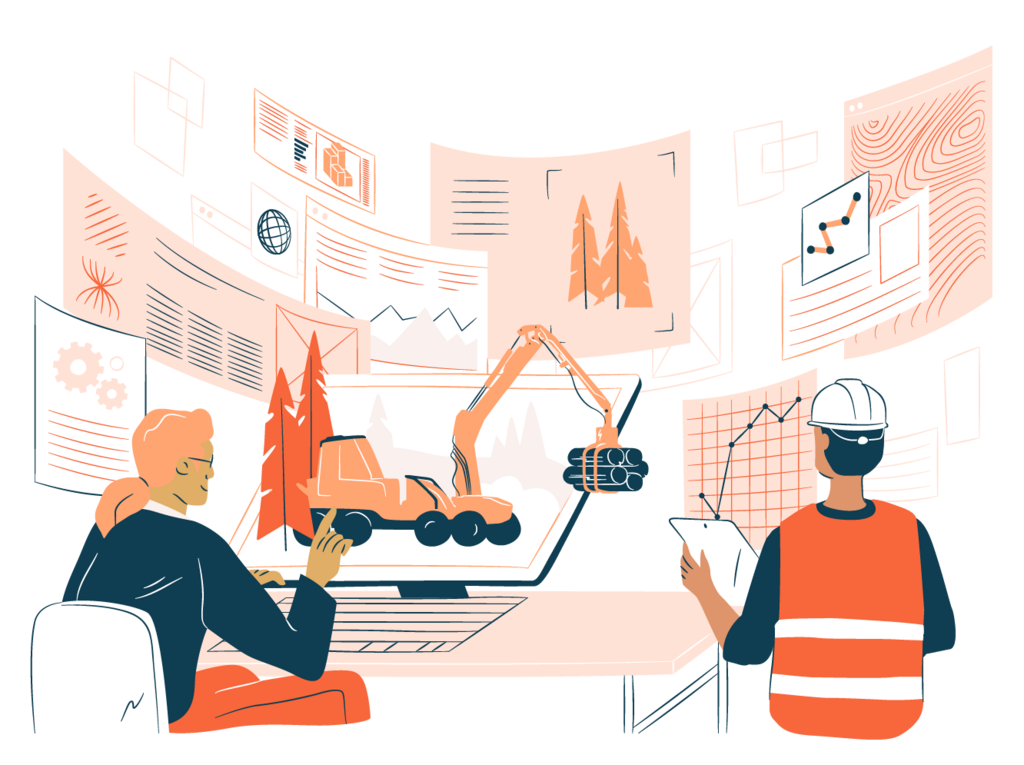
Digital twin is at the core of the lifecycle approach. It is built from the foundations created during product design and used to address various use cases throughout the lifecycle. A complete digital twin not only looks like the real machine in a 3D visualisation but also behaves like it. The digital counterpart evolves during development, materialises in production, and becomes richer through use.
A dual data flow makes R&D truly learning-driven
The product lifecycle consists of two complementary perspectives. The first is the product model: a strategic level where product structures are defined, development is guided, and competitive advantage is built across generations. The second is the individual delivered product: an operational level where each device has its own configuration, lifecycle events and real-world operating environment.
The real value lies in connecting these perspectives. When decisions made at the model level are linked to field data, a closed feedback loop – a dual data flow – is formed. This makes product development learning-driven and business more predictive.
For example, in the maintenance of deployed equipment, companies can save several million euros annually through better lifecycle data management, depending on their size. In practice, this means that maintenance data enable R&D to build smarter diagnostics, improving efficiency by reducing unnecessary component replacements and incorrect fault codes. However, this is only possible if data is brought together from fragmented systems and utilised across the lifecycle.
For example, in the maintenance of deployed equipment, companies can save up to millions of euros annually with better lifecycle data management.
Better decisions, lower risk
Only through real-world use does it become clear how well a product meets expectations, where it performs exceptionally, and where there is room for improvement. This information is valuable not only for maintenance and support, but also for future product and service development.
However, data does not automatically become a valuable asset. To support and create new business, usage data must be reliable, understandable and actionable. This requires clear ownership, shared practices and technological solutions aligned with business goals.
Through the digital dimension of a product, decisions on performance, safety, quality, and cost can be made earlier and with significantly lower risk. Decisions are no longer based on assumptions, but on a combination of design data, historical information and real-world usage data. For leadership, this translates into more efficient use of capital and reduced lifecycle risk.
Not just a technical solution
Ultimately, digitalising the product lifecycle is a leadership challenge. It requires a shared vision of how business, product development and IT support one another. Similarly, it requires the ability to prioritise long-term development over isolated improvements.
The transformation should be approached in a controlled manner. It is often sensible to start with a defined scope, demonstrate value in practice, and gradually scale the model. In this way, digitalisation supports not only strategic renewal but also operational efficiency, while ensuring continuity of operations.
In the long term, the organisations that succeed are those that view products, data and business as a single, continuously evolving whole rather than as separate initiatives.
Where to start?
Our expert-led R&D Discovery service provides an excellent first step towards modern product development. Together, we review the company’s current capabilities, tools, and processes, and compile the findings into a clear overall picture. The outcome is a well-defined view of the development actions that will deliver the greatest value, along with concrete next steps to advance them.
Ask our expert how this could benefit your organisation:
Or read more about the Digital Product Lifecycle approach.