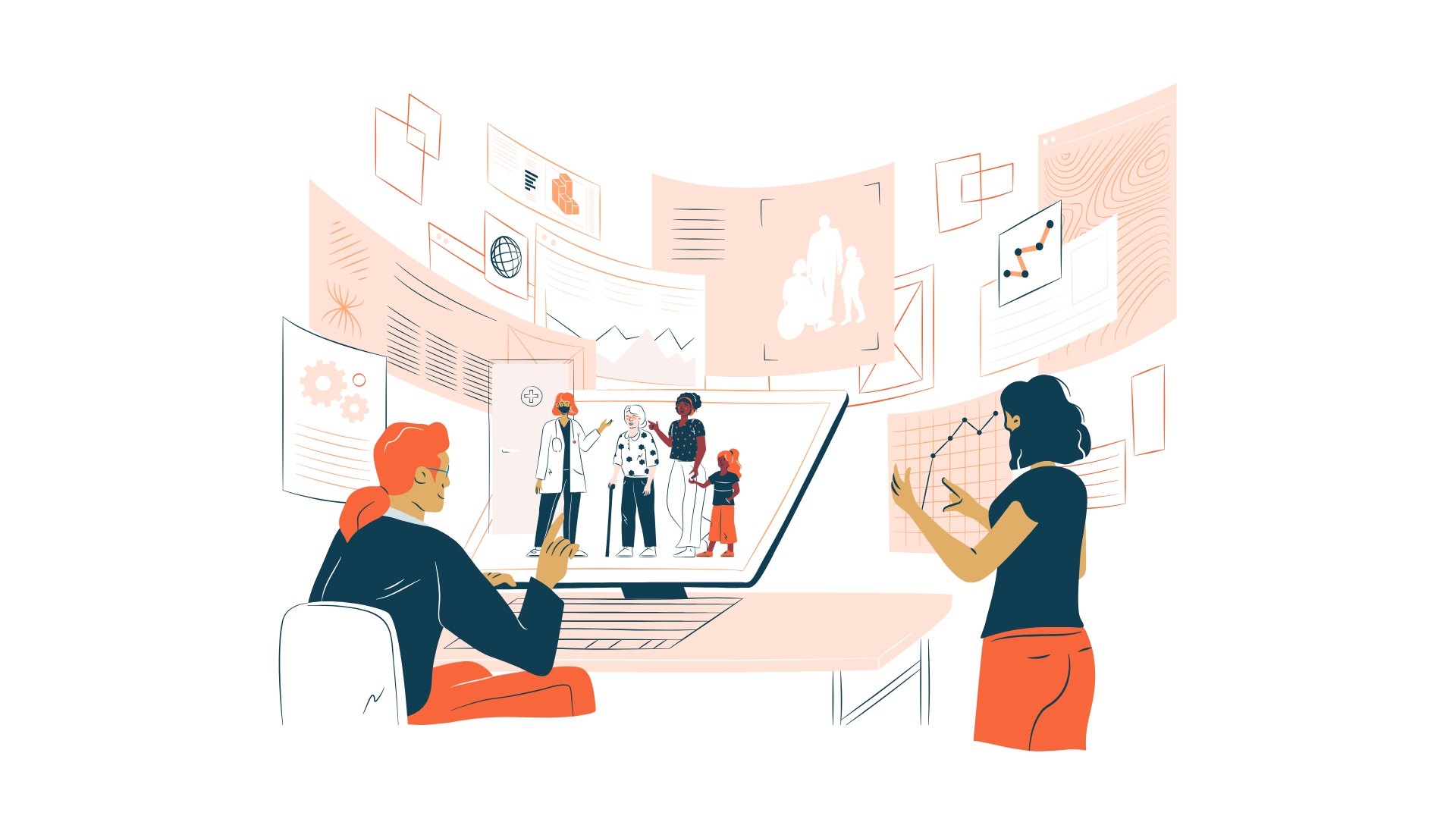
Geopolitical uncertainty, tightening public finances, and strict cost control are forcing the public sector to reform in ways where productivity, security, and trust go hand in hand. In 2026, the focus of the public sector turns to rethinking services, responsible use of artificial intelligence, and digital infrastructure that supports sustainable growth and societal resilience.
By 2026, digitalisation has entered a new phase. It is no longer about developing individual systems or running technological experiments, but about ensuring that the core functions of society remain operational, productive, and trustworthy in an era defined by geopolitical instability, tightening public finances, strict cost control, talent shortages, and rapid technological change.
The constraints of public finances have changed permanently. Expenditure ceilings and cost pressures force prioritisation: not everything can be done, and what is done must be done with greater impact than before.
“Doing more with less” is no longer a strategic choice – it is a reality of the operating environment.
Ultimately, the success of digitalisation is measured by how humane, functional, and trustworthy a society it helps build for citizens.
In his New Year’s speech, President of the Republic of Finland Alexander Stubb summed up the operating environment in three words: peace, growth, and care, while also emphasising concern over the sustainability of public finances. These are precisely the themes that digitalisation must now address.
This broader picture is also reflected in national policy frameworks. The RDI strategy of the Finnish Research and Innovation Council highlights data-driven value creation, transformative technologies, sustainable growth, and security and resilience. At the same time, Sitra’s megatrends show that digitalisation has become a core infrastructure of society, not merely an object of development.
Key public sector themes for 2026
The next phase of digitalisation: rethinking services under cost control
In 2026, the success of digitalisation will be measured by how services work from the citizen and user’s perspective and by how much time, resources, and expertise they free up. Digitising old processes is no longer enough, and often not even helpful.
Tightening finances and strong cost control require a shift from isolated projects to holistic solutions. Services must be redesigned and rebuilt so that they:
- cross administrative boundaries
- eliminate overlap
- reduce manual work
- scale without continuous additional resourcing
This applies equally to central government, municipalities and cities, and the education sector. When the workforce is shrinking and cost pressures are increasing, productivity can only be achieved through a combination of prioritisation, automation, and data.
Artificial intelligence: from experiments to managed core infrastructure
Artificial intelligence is rapidly moving from pilots and experiments into a part of society’s core infrastructure. In 2026, the key question is not whether AI is used, but how it is implemented in a controlled, responsible, and secure way.
From Gofore’s perspective, the role of AI is above all to:
- support expert work and decision-making
- improve productivity within strict budget constraints
- ensure quality and impact
This requires strong information management, clear rules, and an architecture that enables AI to scale without compromising trust or security. AI is not a standalone solution, but it is part of a broader whole: data, processes, and services.
Trust, security, and digital identity
The next phase of digitalisation cannot succeed without trust. Cybersecurity, data protection, and digital self-determination have risen from technical details to strategic leadership issues.
A particularly significant change is the European digital identity wallet (EUDI). It fundamentally transforms how people authenticate themselves, share their data, and interact with public and private services. Identity becomes a foundational layer guiding services, combining:
- secure authentication
- trusted data exchange
- seamless user experience
When digital identity, data, and AI come together, service can begin from a user’s life situation, not from a form or an organisational boundary.
Different sectors, different challenges – one compelling transformation
In central government, cost control, changes in the security environment, and administrative reforms force prioritisation and efficiency. The role of digitalisation is to ensure that decision-making, permit processes, and governance remain reliable even under tightening conditions.
In municipalities and cities, strict cost control is coupled with demographic change. An ageing population, a weakening dependency ratio, and growing service needs require a reassessment of service networks and operating models. In this context, productivity is also an act of care: the ability to safeguard essential services for everyone.
In the education sector, the transformation is particularly structural. Declining age cohorts, tightening funding, pressures to specialise, and international competition for talent are steering development toward ecosystem-level solutions. Digivisio 2030 and Opin.fi make concrete the shift toward flexible and data-driven lifelong learning, where capacity, impact, and funding can be managed as an integrated whole.
Sustainable productivity is sustainable growth
Strict cost control is not the opposite of digitalisation, but its strongest driver. Public sector productivity is not in conflict with growth, but rather a prerequisite for it. Functional digital infrastructure, interoperable services, and reliable data management create the foundation for societal renewal and competitiveness as a whole.
Trust is built together
Gofore leads the digital transformation of the public sector together with authorities, cities, and education actors, turning disruption into sustainable productivity and trust. This means rethinking services, responsibly deploying AI, and embedding security, data, and identity into all digital development.
2026 is not a year for hype.
It is the year when digitalisation must deliver on its promises – as sustainable productivity, a smoothly functioning everyday life, and societal trust.
Let’s rethink the digital society now